
Dr Clare Wood
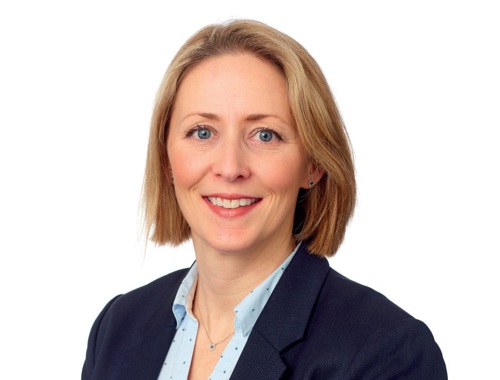
1. Tell us about your role and what you find most exciting about it.
I am an Associate Professor in Civil Engineering at Swansea University and Head of the Department of Civil Engineering. My job involves a combination of academic management, as well as teaching on our Civil Engineering degree programmes and pursuing my research.
One of the things I view as a great positive of pursuing an academic career is the diversity of work that it can involve. As well as having the engineering skills, you need to have a broad set of other critical skills – particularly self-organisation (you’ll not have a manager telling you what to do each day), self-motivation, communication, and your research direction is entirely in your own hands - you can pursue your intellectual interests to a degree that I cannot imagine being possible in any other career.
My passion is working with Industry to identify how academic research can support Industry innovation. My own research focusses on experimental investigation of concrete technology; thanks to recent changes in British Standards the civil and construction industry is at a really exciting point in being able to consider a much broader range of potential concrete binder products and my research aims to support this transition to the use of more sustainable materials.
2. What inspired you to become an engineer?
When considering what undergraduate degree to study I knew wanted to find something that would combine my academic interest in STEM subjects with my creative, organisational and practical problem solving side. I spoke to my teachers and I looked up information about quite a lot of different degree options, and eventually studied an integrated Masters (MEng) in Civil Engineering with Architecture at the University of Glasgow. I secured jobs in engineering companies during the summer breaks so that I could earn some money, gain experience and become more aware of the different kinds of jobs that a graduate could go into.
But ultimately I knew that after my undergraduate degree I wanted to go further down the academic route and so I undertook a postgraduate Research Masters (MRes) and doctorate (PhD) at Swansea University, focussing on Computational Methods for Engineering. After my PhD stayed in research, eventually becoming an academic in my Department.
3. How do you balance your professional and personal lives?
I think it is vital that you identify the things that are important to you, that make you glad to be doing what you are doing, and then find a way to make that a part of the job that you are in. I can’t say that there is balance – there is always going to be more that I would like to try and get done in my research – but I’d say that’s the universal upside and downside of being in research, you never feel like you are finished!
4. In your opinion is there more that can be done to encourage a greater diversity of people into engineering careers?
On the academic side, I really would like to see maths literacy and maths excellence being given more focus for all in both primary and secondary education. Maths confidence is the key to being able to unlock so many other STEM subjects and that strong foundation needs to be developed from the early years.
On the people side, I think it is important to recognise there is no single profile for what is “an engineer”. It takes all sorts. The single most important attribute is to be able to say “I could be an engineer” and then do the work to make it happen.
5. What advice would you give for anyone interested in pursuing an engineering career?
If you are uncertain about what to study, be it at GCSE, A Level or looking at University courses, I would ask you to think about what it is you enjoy or have a natural aptitude for and lean into that. The range of Engineering careers that exist is vast, and the range of options that you have on how to get to them these days is so diverse that it might seem difficult to untangle, or know what the “best” choice is. But what is best for you may look quite different to someone else, so look at Uni degrees, look at apprenticeships, get work experience and don’t be afraid speak to people about what their job is, what they find interesting about it. In other words, you’re going to need to problem solve this to find what works for you, but that’s part of what an engineer does, so crack on.