Underground infrastructure
Underground infrastructure
The current socioeconomic paradigm requires seamless and continuous infrastructure service delivery, supporting uninterrupted movement and commerce. The challenges to delivering such services that are faced by underground infrastructures such as water and wastewater, transportation, telecommunications, and power systems, are exacerbated by difficulties in access and the harsh environment in which these systems reside. Early success in building digital models at city scales through smart city and digital twin concepts offer a promising direction to help reduce such challenges, especially given new breakthroughs in sensing and computation. However, key knowledge gaps remain a barrier. As the Government invests millions of pounds in infrastructure to combat climate change, there is a window of opportunity to mobilise scientific communities to create innovative, socially equitable, minimally disruptive and potentially transformative solutions to how we design, build and operate infrastructure systems, and in particular those that reside in the sub-surface. Advances in fundamental theories and methods are needed for the questions that are considered too difficult to answer today.
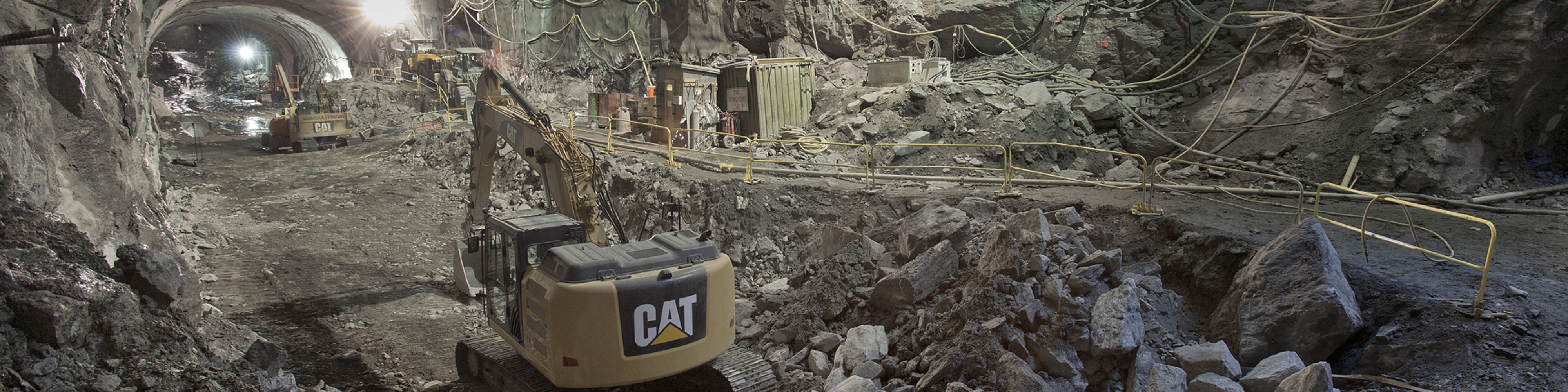
Licence and image credit: Metropolitan Transportation Authority / Patrick Cashin.
Current activities
Project Spotlight
- Assessing the Underworld (ATU)
- Report: US-UK Workshop on Transformation in Urban Underground Infrastructure
View further outputs under the theme of underground infrastructure.